

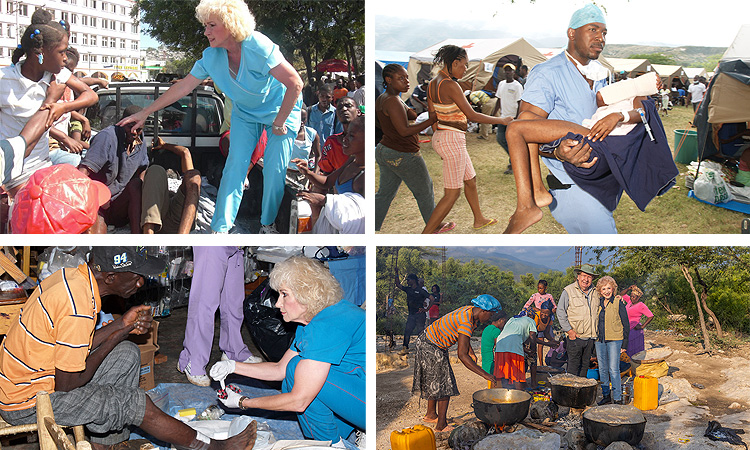
After the terrible earthquake of January 2010, thousands of Haitian people were badly injured and homeless as their homes and neighborhoods had crumbled around them. They became refugees in their own country, needing a safe place to get medical care and try to pick up the pieces of their shattered lives and start over again. God had prepared Love A Child “for such a time as this,” and Bobby and Sherry instantly began saving people from the widespread wreckage. Many injured people came to Love A Child’s field hospital, operated by Harvard Humanitarian Initiative. But after the patients had healed enough to be released from the hospital, they literally had no place to go. This is when God moved our hearts towards helping the Haitian people in an additional direction from how Love A Child had always been serving the needs of the poor with food, medicine, education, and delivering the word of God.
At that time, we had 1200 families who had been injured and thrust out of their broken homes, finding refuge at Love A Child in Fond Parisien. God inspired Bobby and Sherry to build 600 houses for the victims to live in, creating Miracle Village. But now what? They had no means to support themselves. Their former jobs, houses, and lives had been destroyed by the earthquake.
That is when we realized that helping people in the name of Jesus is an evolutionary process of first giving relief, then helping them to recover, and finally assisting them to develop toward self-sustainability. The highest form of helping people is to help them develop their own full potential for creating a sustainable improvement in their lives. Love A Child created a model for “Development for Sustainability,” using many interdependent elements working together to promote self-sufficiency to break the long-term cycle of poverty. We hoped our Development for Sustainability outreach would create self-sufficiency, helping families move from dependency to independence, becoming self-sufficient for the long-term. We felt that if we could do this right, we would be providing “food for a lifetime,” a future of hope, and offering a path out of poverty toward permanent improvement.
– – To Be Continued (Part 1 of a 3-Part Saturday Post.)
Rad Hazelip, Assistant Executive Director